

Towards a Blockchain-Enabled United States Constitutional Compound Republic

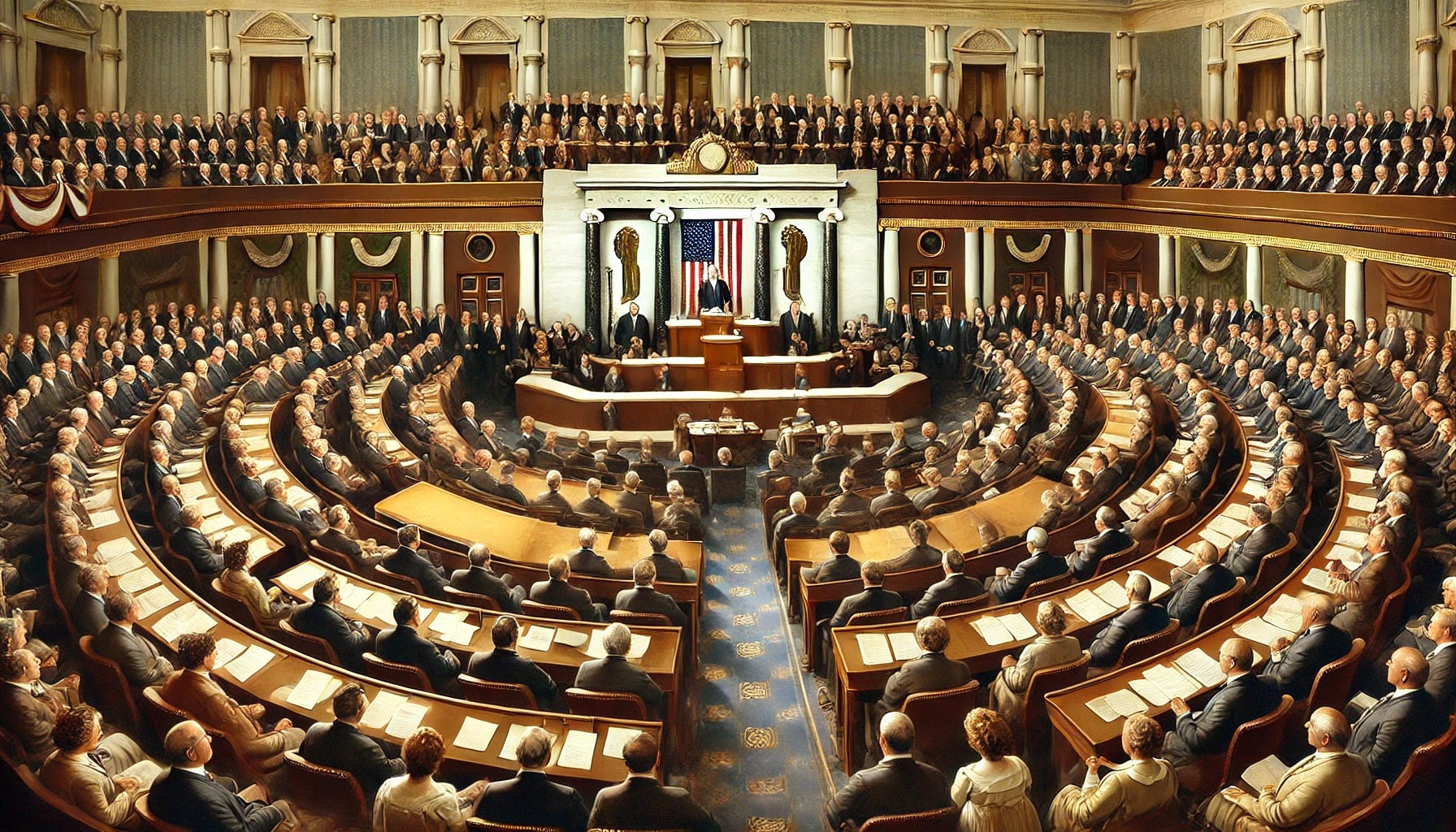
The United States stands as a compound republic, a governance model designed to balance power, distribute authority, and safeguard individual liberties through a multi-layered system of checks and balances. This distinction, deeply embedded in the country’s constitutional framework, serves as the foundation for both its historical resilience and its future potential in the face of emerging challenges.
Today, as governance models evolve and decentralized technologies like Decentralized Autonomous Organizations (DAOs) gain traction, the Madisonian vision of a balanced, multi-layered governance system finds new relevance.
This article synthesizes the United States compound republic, the Madisonian model of constitutionalism, optimistic execution in governance, and the potential of decentralized governance through DAOs. It also explores how blockchain-based on-chain governance mechanisms, smart contracts, and decentralized identity verification can enhance transparency and efficiency in governance structures.
The Nature of the United States as a Compound Republic: Historical Foundations
The United States functions as a compound republic, a governance model that ensures sovereignty is distributed across multiple levels of government and institutional structures to balance power and uphold individual liberties. James Madison and the framers of the Constitution sought to prevent tyranny through a deliberate distribution of power:
Separation of Powers: Legislative, Executive, and Judicial branches operate independently with mutual oversight.
Federalism: Power is shared between federal and state governments, ensuring local governance retains substantial autonomy.
Layered Representation: The Senate, House, Electoral College, and state governments create multiple avenues for representation and decision-making.
Institutional Redundancy: The coexistence of multiple governing bodies ensures that no single entity can seize absolute control.
These mechanisms were designed not only to prevent centralization of power, but also to enable dynamic governance where multiple forces interact to produce stability through competition and collaboration.
Blockchain Mechanisms in Governance: On-Chain Solutions for a Decentralized Republic
Smart Contracts as Governance Executors
In decentralized systems, smart contracts automate governance rules, ensuring that decisions are executed without intermediary influence. These contracts are particularly relevant in modernizing constitutional principles:
Legislative Execution: Bills and policies could be codified as self-executing smart contracts, where execution occurs based on predefined conditions, for example, budget allocations can be triggered automatically when fiscal parameters are met.
Automated Checks and Balances: Multi-signature smart contracts and time-lock mechanisms can ensure executive branch actions are verified and cannot be unilaterally overridden.
Immutable Governance Logs: All legislative and executive actions could be stored on a public ledger, ensuring full transparency and auditability.
Decentralized Identity (DID) and Verifiable Credentials
A critical component of on-chain governance is ensuring secure, fraud-resistant participation in governance processes. Decentralized Identity (DID) systems leverage blockchain-based public-private key cryptography to:
Verify Voter Identity Without Centralized Databases: Citizens could use zero-knowledge proofs to confirm their voting eligibility without exposing personal data.
Prevent Election Fraud: Every vote, stored on a blockchain, would be immutable and verifiable, eliminating the risks of ballot tampering.
Enable Programmable Representation: DIDs could enable delegated representation, where citizens assign power to trusted representatives through voting in a transparent, on-chain manner.
Tokenized Stakeholder Participation
DAOs provide a tokenized governance model, where stakeholders hold governance tokens representing voting power. The U.S. compound republic could adopt a similar approach to:
Ensure Participatory Budgeting: Citizens and state representatives could allocate funds through governance token voting, ensuring tax allocation aligns with community priorities.
Enforce Constitutional Constraints: Governance tokens could function as constitutional checkpoints, requiring supermajority approval for major systemic changes.
Create Adaptive Regulatory Models: Governance rules could be modified through upgradeable smart contracts, ensuring responsive adaptation without undermining legal stability.
The Madisonian Model: Balancing Decentralized Authority with Formal Institutions
James Madison’s model emphasized distributed authority as a safeguard against centralization. Blockchain systems can reinforce this principle by:
Institutionalizing Interdependence: Just as the three branches of government counterbalance each other, multi-layered governance smart contracts can prevent any one entity from dominating policy execution.
Judicial & Legislative Restraints in Digital Systems: DAOs employ arbitration mechanisms akin to judicial review, ensuring contract violations or governance overreach are adjudicated fairly.
Automating Executive Oversight: The executive branch's functions could be monitored via oracles, ensuring compliance with constitutional constraints through verifiable external data feeds.
Strategic Imperatives for the Future
To integrate blockchain principles into governance while maintaining constitutional fidelity, key strategic imperatives include:
Strengthen Institutional Redundancy with Smart Contracts
Use multi-signature approval mechanisms for government spending and execution.
Implement DAO-like governance structures at local and state levels to increase participatory decision-making.
Implement Blockchain-Based Identity and Voting Systems
Deploy Decentralized Identity (DID) systems to secure electoral integrity.
Utilize blockchain-based voting platforms to ensure transparent and verifiable democratic processes.
Tokenize Governance Participation
Allow governance token models where citizens stake votes on policy decisions.
Implement quadratic voting systems to weigh community priorities proportionally.
Modernize Constitutional Constraints Through Blockchain Enforcement
Design constitutional smart contracts that prevent policy overreach.
Require on-chain supermajority approvals for major systemic changes, similar to constitutional amendments.
A Blockchain-Enabled Compound Republic
The United States compound republic is uniquely positioned to integrate the historical principles of distributed governance with modern blockchain advancements. By aligning Madisonian decentralization principles with DAO governance, a future-proof governance model can emerge—one that is transparent, secure, participatory, and self-executing.
In an era where centralized control is increasingly scrutinized, leveraging blockchain as an enforcement layer for constitutional principles represents a natural evolution of decentralized governance.
The United States was built for this challenge. Its constitutional DNA is decentralized by design, and with blockchain, its governance can evolve while staying true to its foundational principles.
If you are interested in this research, please follow our R&D work at United States Lab.